What are clinical trials?

Clinical trials are research studies that assess how safe and effective a treatment or medical device is.

Clinical trials are an important part of developing new treatments. Research through clinical trials helps improve understanding of health conditions and supports the development of better management options.

Clinical trials must be approved by regulatory authorities and ethics committees before they begin. They follow strict safety and ethical standards to protect participants. Taking part in a clinical trial is voluntary, and you can choose to leave a study at any time.

What are clinical trials?

Clinical trials are research studies that assess how safe and effective a treatment or medical device is.

Clinical trials are an important part of developing new treatments. Research through clinical trials helps improve understanding of health conditions and supports the development of better management options.

Clinical trials must be approved by regulatory authorities and ethics committees before they begin. They follow strict safety and ethical standards to protect participants. Taking part in a clinical trial is voluntary, and you can choose to leave a study at any time.
 Key Terms

Understanding common terms can help you make informed decisions.

  • Investigational treatment: a medicine or therapy that is still being studied and is not yet approved. This may include new or existing drugs, methods, or medical devices
  • Sponsor: the organization responsible for the study or program
  • Regulatory authority: the national institution that approves and oversees medicines
  • Eligibility criteria: the requirements you must meet to take part in a research study
  • Informed consent: the process of receiving and understanding information about a research study before agreeing to take part

Are clinical trials right for you?

Clinical trials may offer unique treatment opportunities, but you may want to consider:

  • Possible benefits and risks of the treatment
  • Travel or time commitments
  • Costs and coverage
  • How it may affect your current care

Clinical trials are often run in hospitals or clinics. Some trials are decentralized, which means parts of the study can take place at home, such as remote monitoring or home visits. This can make participation more accessible for some people.

Speak with your healthcare provider if you are considering a clinical trial. Discussing your options can help you decide whether to volunteer.

What happens before you take part?

Once it has been confirmed that you are eligible to join a clinical trial and the trial team agree, you will be given clear information about:

  • The purpose of the study
  • What participation involves
  • Possible benefits and risks
  • Your rights, including the right to withdraw from the study

A healthcare provider will talk you through this as part of the informed consent process and answer any questions you have. Once you and the trial team are confident that you are suitable for the trial, and the consent form has been completed, your participation can begin.

Phases of clinical trials

Clinical trials are completed in phases.

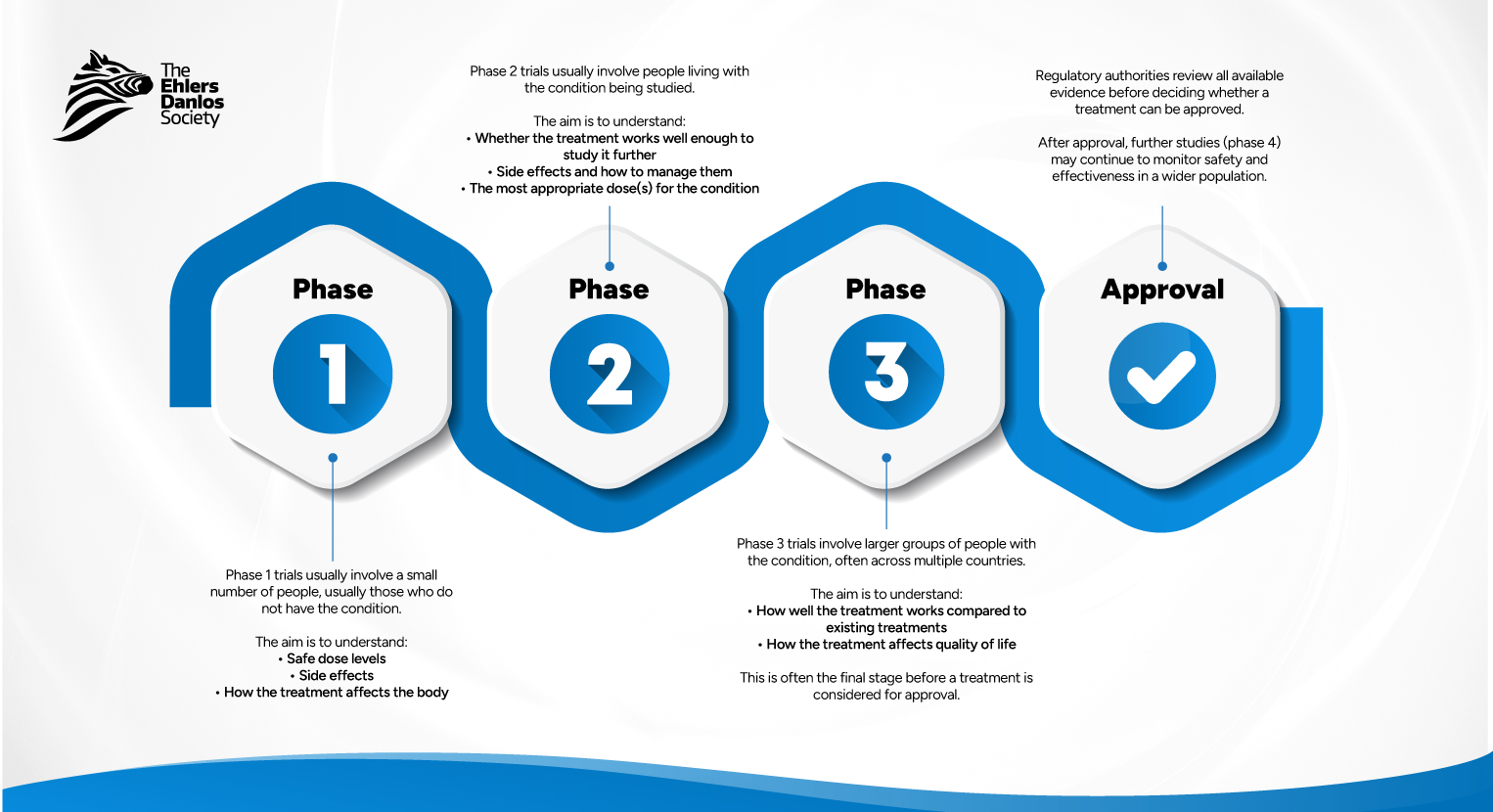
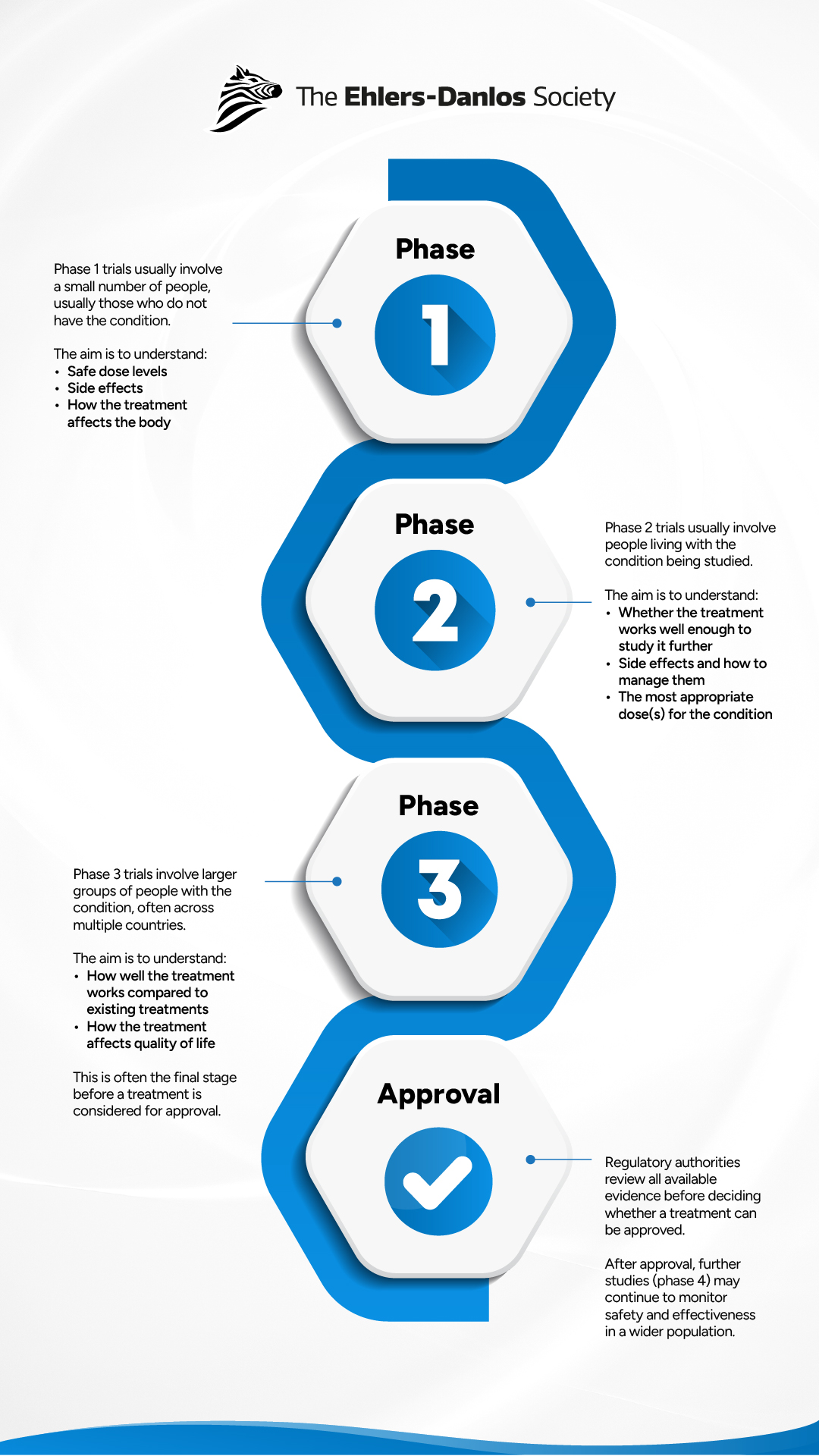
Phase 1 Phase 1 trials usually involve a small number of people, usually those who do not have the condition. The aim is to understand: Safe dose levels Side effects How the treatment affects the body Phase 2 Phase 2 trials usually involve people living with the condition being studied. The aim is to understand: Whether the treatment works well enough to study it further Side effects and how to manage them The most appropriate dose(s) for the condition Phase 3 Phase 3 trials involve larger groups of people with the condition, often across multiple countries. The aim is to understand: How well the treatment works compared to existing treatments How the treatment affects quality of life This is often the final stage before a treatment is considered for approval. Approval Regulatory authorities review all available evidence before deciding whether a treatment can be approved. Phase 4 After approval, further studies (phase 4) may continue to monitor safety and effectiveness in a wider population.

What is an early access program (EAP)?

Early access programs (EAPs) give people a way to access investigational treatments outside of a clinical trial. They may be considered when:

  • A person has a serious or life-limiting condition
  • There are limited or no approved management options
  • A treatment is still being studied but may offer benefit

EAPs are not guaranteed for every clinical trial and may sometimes be available for off-label use of treatments. Access depends on factors such as national regulations, support from a healthcare provider, and sponsor approval.

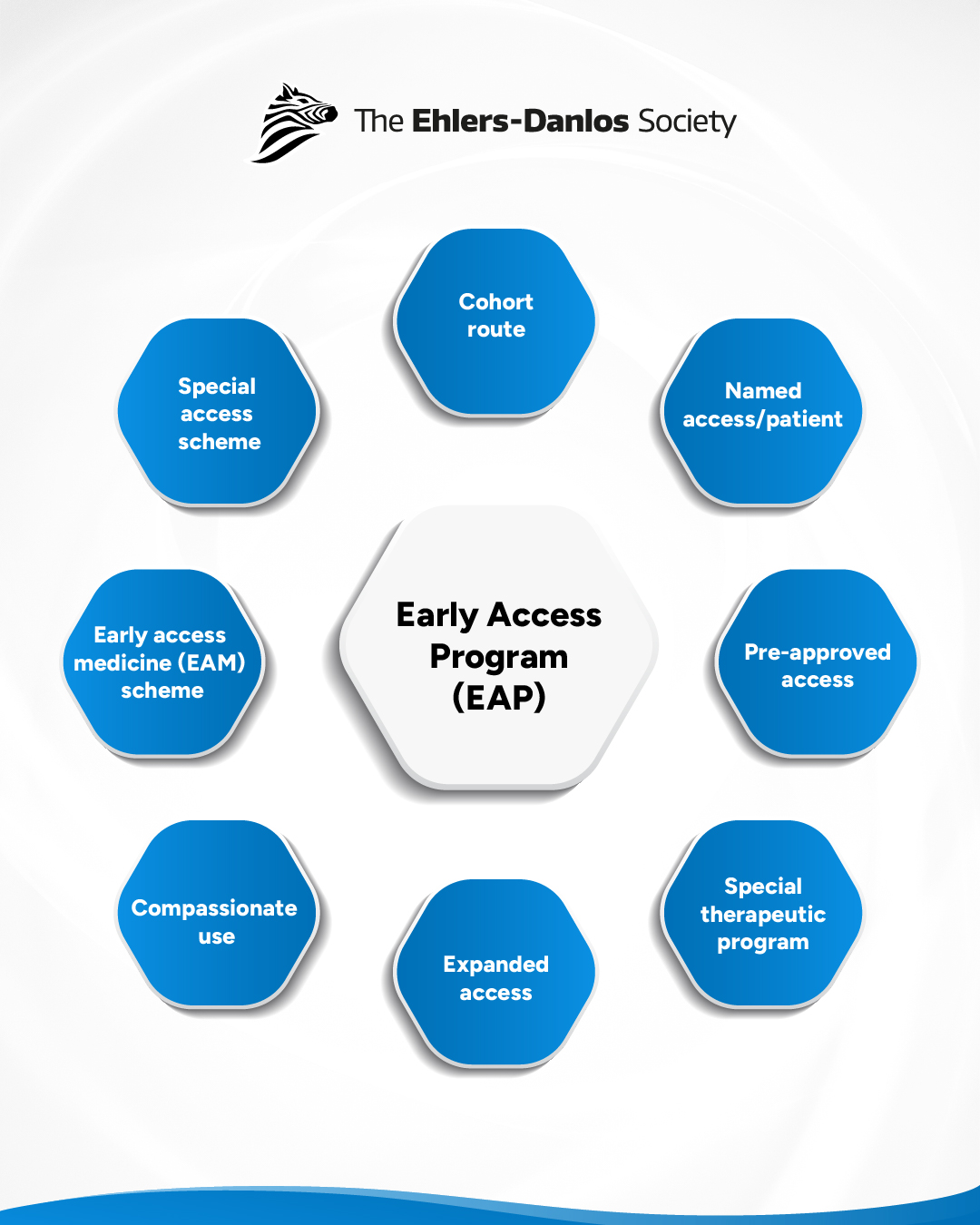
Early access programs may be described using different terms depending on the country, including:

EAPs do not replace clinical trials. Clinical trials remain the main way to assess a new treatment’s safety and effectiveness.

What is an early access program (EAP)?

Early access programs (EAPs) give people a way to access investigational treatments outside of a clinical trial. They may be considered when:

  • A person has a serious or life-limiting condition
  • There are limited or no approved management options
  • A treatment is still being studied but may offer benefit

EAPs are not guaranteed for every clinical trial and may sometimes be available for off-label use of treatments. Access depends on factors such as national regulations, support from a healthcare provider, and sponsor approval.

Early access programs may be described using different terms depending on the country, including:

EAPs do not replace clinical trials. Clinical trials remain the main way to assess a new treatment’s safety and effectiveness.

Step-by-step: Finding a clinical trial

If you are exploring clinical trials or early access for the first time, the process will include the following steps:

  1. You experience symptoms and receive a diagnosis from your healthcare provider
  2. You explore available management options with your healthcare provider(s)
  3. Your healthcare provider(s) assesses whether you may be eligible for a clinical trial
  4. You are referred, or an application is submitted by your healthcare provider, to the study team or sponsor
  5. Your application is reviewed by the study sponsor and/or regulatory authority
  6. If approved, you begin the informed consent process for the clinical trial
  7. You can start the treatment

During the trial, the trial’s doctors will likely be responsible for monitoring and managing your medical concerns, supported by your usual healthcare team.

If a clinical trial is not suitable:

  1. Your healthcare provider may consider whether an early access program may be appropriate
  2. Your healthcare provider submits a request on your behalf
  3. Your request is reviewed for safety, ethics, and eligibility by the sponsor and/or regulatory authority
  4. If approved, you receive the treatment
  5. Your healthcare provider will monitor your health and report any safety concerns. They may also collect additional data to support the ongoing research.

Not everyone will be eligible for a clinical trial or early access program. Your healthcare provider can help you understand your options.

Find a Clinical Trial

Finding opportunities to take part in research can sometimes be difficult. We share research opportunities through Trialport, a platform that helps connect people with potential research and clinical studies.

You can also find research to take part in on our Take Part in Research page or the Clinicaltrials.gov website.

Sign up to The Ehlers-Danlos Society mailing list