The Ehlers-Danlos Society is grateful to Willem Mesman from Amsterdam, Netherlands, who has donated €5,000 to enable enrollment of individuals with arthrochalasia Ehlers-Danlos syndrome (aEDS) into its global biobank. Willem’s daughter Claire was impacted by aEDS, and tragically passed away in 2021. Willem hopes to fund vital research into this rare disease to improve care and treatment. Here, he shares his memories of Claire and her story.
“This life story is about my daughter Claire. She was born in Middelburg, Netherlands, in 1980.
In 1982, I moved with my family to Deurne for work. Claire went to elementary school there. She was always a cheerful and optimistic child in character and she has retained her optimism and that very admirable intense zest for life despite the increasingly difficult life.
She loved sports, in fact, many types of sports. In high school, hockey was her favorite sport. It was during this time that she first began to experience increasing problems with her joints. She was often injured.
Usually there was “just” something dislocated, especially her shoulder was the biggest problem. Sometimes her knee and along the way, each fall caused a fracture, luxation or subluxation. It became clear that there must be something very wrong with her joints. But Claire was always a go-getter. When she went for something, she really went for it. This was also the case for hockey. She was not easily discouraged, literally or figuratively.
The problem with her shoulder led to several visits to an orthopedic clinic and unfortunately, that also became the first negative experience with a clinic or hospital. A diagnosis could not be made, so each specialist had his own “diagnosis” and treatment. Research was done in Nijmegen, where it was decided to reef connective tissue and tendons (bind them together) but soon after the operation the same shoulder dislocated again.
Since they didn’t know what to do, she was sent to the psychiatrist for convenience. There she got quite a shock because the psychiatrist was of the opinion that she was dislocating her shoulder herself. This event definitely left her with a trauma. The beginning of a long series of traumas with hospitals, clinics, diagnoses, non-cooperating specialists, misunderstanding due to insufficient listening and therefore too little respect for her as a person.
The psychiatrist in question from Nijmegen had to apologize after a complaint on our part, because it is simply not possible to dislocate your shoulder yourself. Why do I mention this so emphatically? At the heart of too much failed care, lies in inadequate listening, miscommunication, or on the basis of complacency. NO communication between specialists.
An incurable, progressive disease may not be recognized by doctors. What is possible, however, is to work together in teams and jointly search for the missing knowledge for better treatments, based on the patient himself as the best expert by experience.
Nevertheless, after high school, Claire continued her studies in Nijmegen, where she went to live in a room. Here she obtained her Bachelor’s degree in Law and Public Administration and then her Doctorate in American Studies (also known as American Studies). She loved learning foreign languages. As a secondary student, she learned Swedish, French and Hebrew in addition to English and German.
During her studies, she suffered more and more from her joints, muscles and even the connective tissue of her internal organs was affected. That wasn’t clear at the time. Not a single doctor we consulted in the Netherlands understood what could be the cause of all her problems. For every increasingly serious physical problem, there was a limited solution.
For example, at one point her jaw became severely cramped while eating something, which is very painful. In Groningen she had surgery on her jaw with fortunately reasonable results but also with permanent mutilation. People may have thought every time something was fixed, now it’s done. Nothing could be further from the truth, because there was no overview of the many facets of her disease. No coherent research or teamwork. Her illness was hardly known in the Benelux. I’m talking about the beginning of this century. Her connective tissue problems and general fragility turned out to be a fact.
She suffered more and more from lung problems (inflammation, asthma, shortness of breath, etc.) and luxations became fractures more often. Of course, her daily life went on as usual. Despite the difficult periods, she passed her studies. She left for Canada as a trainee in the early 2000s to work at the Dutch embassy in Ottawa. She had a great time there. She enjoyed her friends, colleagues, cats, sports (cycling) and a lot of other challenges.
The ambassador in Ottawa advised her to consult a doctor who was familiar with an incurable and congenital disease, which was relatively unknown at the time, and which could be diagnosed by a DNA test. The test showed that she did, indeed, was suffering from Ehlers-Danlos syndrome (EDS). In her case, type aEDS, arthrochalasia EDS.
Because there was no curative treatment then, and still today, she was told that she might not make it to the age of 30. Nevertheless, she continued her work and enjoyed her life to the fullest in Canada, later also, in The Hague, where she worked as a policy advisor for the Ministry of Economic Affairs and Health, where she wrote articles for ministers and MPs. She lived her life, like always, to the fullest. With the hope of improving her illness.
She worked at the ministry until she couldn’t anymore due to the increasing number of admissions to hospitals. In the hospitals, she had a different specialist for each ailment and despite insistence on thorough consultation and a team approach with a person with final responsibility, an efficient and constructive approach did not survive the classic hierarchy and one-man arrogance. In retrospect, this has proven to be crippling and had needlessly worsened her quality of life. In the last years of her life, she had more and more doctors in different hospitals.
It became increasingly clear that she had problems with her collagen: her flexibility, immune system and additional ailments, such as lung problems, many infections affected her body more and more. She even got through life-threatening blood poisoning from a fungal infection with admission to the ICU. Functioning became more and more difficult. Her kidneys, her ability to walk due to, among other things, knee infections, damage to the stomach and intestines, and the functioning of these organs became increasingly poor.
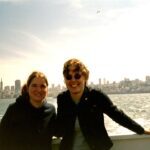
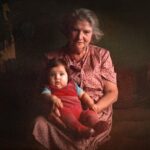


All in all, this led to a form of severe disability, which in 2015 she ended up permanently in a wheelchair and on probes. Her employer, the national government, had increasingly dropped her in the process of dismissal in 2016. She could have written her pieces and worked very well from home, but that was not allowed for reasons that are unclear. In addition to the worsening of the disease, the disability further affected her self-esteem. Pigeonholed thinkers.
But Claire still lived her life to the her fullest. She arranged her own home care, volunteered at theatre sports, loved gaming and reading books in various languages. She would have liked to have children, but thought that would have been dangerous because of the genetic transmission of the disease. She suffered a lot from that. She loved animals, especially cats that surrounded her all her life. She had many friends and loved company, partying, traveling. Things that became less and less so in the last ten years of her life.
Because of this accumulation of a worsening disease, life and wanting to live became more difficult for her in recent years. Until then, as I said, she was full of plans full of potential solutions, because she wanted to live so badly. That still hurts me to have seen this. This decrease in quality of life and with increasing pain. Claire didn’t deserve such a life. She was so unique, social, committed, an enthusiastic person who still wanted to do so much. She still wanted so much, but this disease was unbearable. The solutions were not available. Very little research and no collaboration between the different specialties in the Netherlands (The Hague). That actually still makes it extra unsavoury.
Fortunately, The Ehlers-Danlos Society is a fine and large global organization that works to gain knowledge and improve the treatment of the complex problems of this congenital disease. The Ehlers-Danlos Society is really involved in the full breadth of disease awareness, care, research, knowledge transfer, and intense patient support. Here, the patient is really central and also with the affiliated specialists.
On the first day of spring in 2021, Claire passed away, her body was exhausted and the pain in so many places was unbearable. Even though it was and is a relief that she doesn’t have to suffer anymore, I miss her intensely. She leaves a hole. She will always be a big part of and in me.
In remembrance of Claire, I am now donating to the important biobank project of The Ehlers- Danlos Society. This is a major step forward in research into the cause of the different types of EDS.
The biobank will advance medical research by providing scientists with samples they can use to better understand EDS and HSD at the genetic, protein, and tissue levels. This could help researchers find new treatments for these conditions.
Furthermore, The Ehlers-Danlos Society satisfies all my major concerns with seminars and symposia to gain knowledge and experience.”
Willem Mesman, Father of Claire
The biobank will start a phased program working with researchers and clinicians worldwide undertaking specific and approved researched studies to collect data and samples. Community members cannnot apply directly to the biobank but we encourage individuals with aEDS to join the global DICE EDS and HSD Registry. Together, we can advance understanding and create a brighter future for the aEDS community.