Our Research Strategy
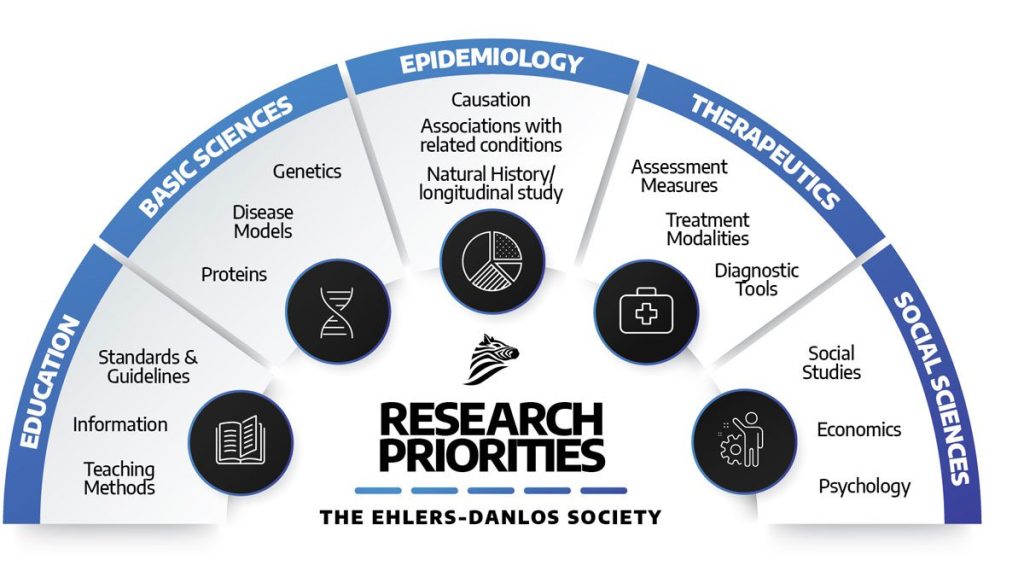
The Ehlers-Danlos syndromes (EDS) and hypermobility spectrum disorders (HSD) are complex conditions. There remain many unanswered questions. These questions include our understanding of the basic sciences at a genetic and protein level and their interactions with the environment; the functional changes in disease (pathophysiology) that arise from related disorders and their true relationships with EDS and HSD; the best ways to measure and treat symptoms related to EDS and HSD; the social impact of ill-health; and the best ways to educate and share information.
The Ehlers-Danlos Society has established a roadmap to develop and convey its research priorities, in collaboration with The International Consortium on EDS and HSD. We aim to inform researchers and funders of areas of interest that they may wish to explore or support.
These priorities are based The Society’s ongoing discussions with many stakeholders including the EDS and HSD community, our boards and coalitions, The International Consortium, researchers, industry leads, donors and grant awarding bodies. To ensure that the portfolio remains live, up to date, we encourage views from our whole community.
Governed by the Medical and Scientific Board
Our Research Programs
Global Biobank
A pioneering initiative designed to advance research into all types of EDS and HSD by providing a centralized repository of biological samples from individuals worldwide. This invaluable resource enables researchers to study the genetic and molecular aspects of these conditions.
Natural History Study
A vital research initiative focused on understanding the long-term progression of EDS and HSD. This comprehensive study aims to track how these conditions evolve over time, providing critical insights that will guide future diagnoses, treatments, and care.
HEDGE
A pivotal research initiative aimed at uncovering the genetic markers associated with hypermobile Ehlers-Danlos syndrome (hEDS). By identifying the underlying genetic causes of hEDS, this groundbreaking study has the potential to transform diagnosis, treatment, and care for individuals with the condition.

hEDS and HSD Criteria Study
A critical research program focused on refining and updating the diagnostic criteria for hEDS and HSD. This study aims to enhance the accuracy and consistency of diagnoses, reducing the diagnostic odyssey for patients and improving access to appropriate care.
Replication Studies
Aiming to validate findings of a recent cell biology study that discovered a potential genetic marker for hEDS. It will also explore the correlation between EDS, HSD, and Fibromyalgia.
DICE EDS and HSD Global Registry
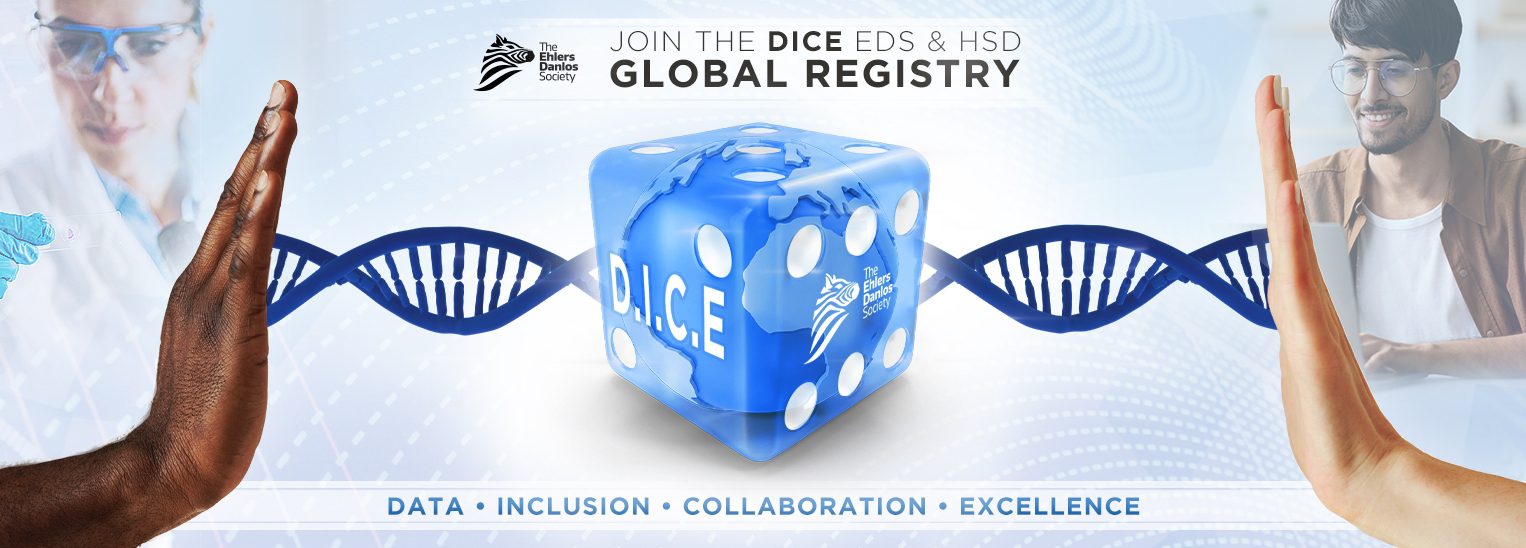
A global registry that facilitates community and researcher engagement in studies that advance understanding, improve diagnosis, and support the development of better care. People with Ehlers-Danlos Syndromes and Hypermobility Spectrum Disorders can participate in surveys and studies at their own pace, anywhere in the world.
Leiden Open Variant Database (LOVD)
An open-source DNA variation database system for cataloging genetic variants. This crucial resource supports research and diagnostics into all types of EDS and HSD, by enabling the collection, curation, and sharing of DNA variations, advancing understanding of genetic disorders, and targeted therapies.
Our Research Programs
A pioneering initiative designed to advance research into all types of EDS and HSD by providing a centralized repository of biological samples from individuals worldwide. This invaluable resource enables researchers to study the genetic and molecular aspects of these conditions.
A vital research initiative focused on understanding the long-term progression of EDS and HSD. This comprehensive study aims to track how these conditions evolve over time, providing critical insights that will guide future diagnoses, treatments, and care.
A pivotal research initiative aimed at uncovering the genetic markers associated with hypermobile Ehlers-Danlos syndrome (hEDS). By identifying the underlying genetic causes of hEDS, this groundbreaking study has the potential to transform diagnosis, treatment, and care for individuals with the condition.
A critical research program focused on refining and updating the diagnostic criteria for hEDS and HSD. This study aims to enhance the accuracy and consistency of diagnoses, reducing the diagnostic odyssey for patients and improving access to appropriate care.
Aiming to validate findings of a recent cell biology study that discovered a potential genetic marker for hEDS. It will also explore the correlation between EDS, HSD, and Fibromyalgia.
A global registry that facilitates community and researcher engagement in studies that advance understanding, improve diagnosis, and support the development of better care. People with Ehlers-Danlos Syndromes and Hypermobility Spectrum Disorders can participate in surveys and studies at their own pace, anywhere in the world.
An open-source DNA variation database system for cataloging genetic variants. This crucial resource supports research and diagnostics into all types of EDS and HSD, by enabling the collection, curation, and sharing of DNA variations, advancing understanding of genetic disorders, and targeted therapies.
Opportunities and Funding for Researchers

Providing grants and financial support to researchers and institutions, the program encourages groundbreaking research aimed at improving care, developing new therapies, and enhancing diagnostic tools. This initiative plays a crucial role in fostering innovation and collaboration within the global research community, ultimately helping to transform the lives of individuals affected by these complex conditions.
The RIC connects passionate supporters with researchers to fund and advance cutting-edge studies in EDS and HSD. Through quarterly webinars, researchers present proposals directly to RIC members, who have the opportunity to invest in impactful research projects.
Through multidisciplinary working groups, the Consortium focuses on developing best practices, publishing research, and creating educational resources that benefit healthcare providers and community members alike, driving forward the understanding of these complex conditions and ensuring the implementation of standardized care worldwide.

Researchers can apply for access to data from the DICE EDS & HSD Global Registry, which includes comprehensive registry and survey data supporting a wide range of research initiatives on EDS and HSD.
Applicants must submit a research proposal outlining the study’s aims, methodology, and data requirements. All requests are reviewed by the DICE Team, and Tier 3 data requests also undergo review by the Medical and Scientific Board.

The Ehlers-Danlos Society supports ethically approved research through targeted survey promotion and participant recruitment initiatives. Approved studies can be shared through our community newsletters, social media channels, and research engagement platforms to reach global EDS and HSD audiences.
The program supports researchers in publishing their EDS and HSD studies in open-access journals, ensuring that new discoveries are freely available to clinicians, scientists, and the global community. This program removes financial barriers to publication, promotes transparency, and accelerates the sharing of knowledge that can advance diagnosis, treatment, and care.
The Society provides official letters of support for researchers who require them for grant applications, ethics submissions, or institutional review processes. These letters can affirm institutional collaboration, data access plans, or community engagement support.
Take Part in Research
Join the DICE EDS & HSD Global Registry
By joining our global registry, individuals living with Ehlers-Danlos syndromes (EDS) or hypermobility spectrum disorders (HSD) contribute valuable information that helps researchers better understand these conditions. Your participation supports discoveries that may improve diagnosis, treatment, and care worldwide.
Participate in the Global Biobank
Participants can choose to contribute biological samples to the Global Biobank, enabling genetic and molecular research that drives scientific progress. Each sample brings researchers closer to uncovering the underlying mechanisms of EDS and HSD.
Find a Clinical Trial
Finding opportunities to take part in research can sometimes be difficult. We share research opportunities through pRxEngage, a platform that helps connect people with potential research and clinical studies.
Research Studies & Surveys
The Society regularly shares opportunities to participate in ethically approved studies and surveys. Taking part helps researchers collect vital data on lived experiences, symptoms, and quality of life, shaping future research priorities and clinical care.
Take Part in Research
Join the DICE EDS & HSD Global Registry
By joining our global registry, individuals living with Ehlers-Danlos syndromes (EDS) or hypermobility spectrum disorders (HSD) contribute valuable information that helps researchers better understand these conditions. Your participation supports discoveries that may improve diagnosis, treatment, and care worldwide.
Participate in the Global Biobank
Participants can choose to contribute biological samples to the Global Biobank, enabling genetic and molecular research that drives scientific progress. Each sample brings researchers closer to uncovering the underlying mechanisms of EDS and HSD.
Research Studies & Surveys
The Society regularly shares opportunities to participate in ethically approved studies and surveys. Taking part helps researchers collect vital data on lived experiences, symptoms, and quality of life, shaping future research priorities and clinical care.
General Research Fund
Support the Society’s overall research mission through a contribution to the General Research Fund. Donations are strategically allocated to priority areas, including ongoing studies, infrastructure development, and emerging opportunities identified by the Medical and Scientific Board. This flexible funding ensures that we can respond rapidly to promising research ideas and global collaborations.