Why HEDGE Matters
Hypermobile Ehlers-Danlos syndrome (hEDS) is the most common type of the Ehlers-Danlos syndromes, yet it is the only type without an identified genetic marker. This means that diagnosis is still based on clinical criteria, not a lab test, often leading to delays, misdiagnosis, and barriers to care.
The HEDGE Study (Hypermobile Ehlers-Danlos Genetic Evaluation) was launched in 2018 by The Ehlers-Danlos Society to address this. Its aim is to uncover the genetic causes of hEDS and to build the foundation for future diagnostic tests and targeted therapies.
A Global First
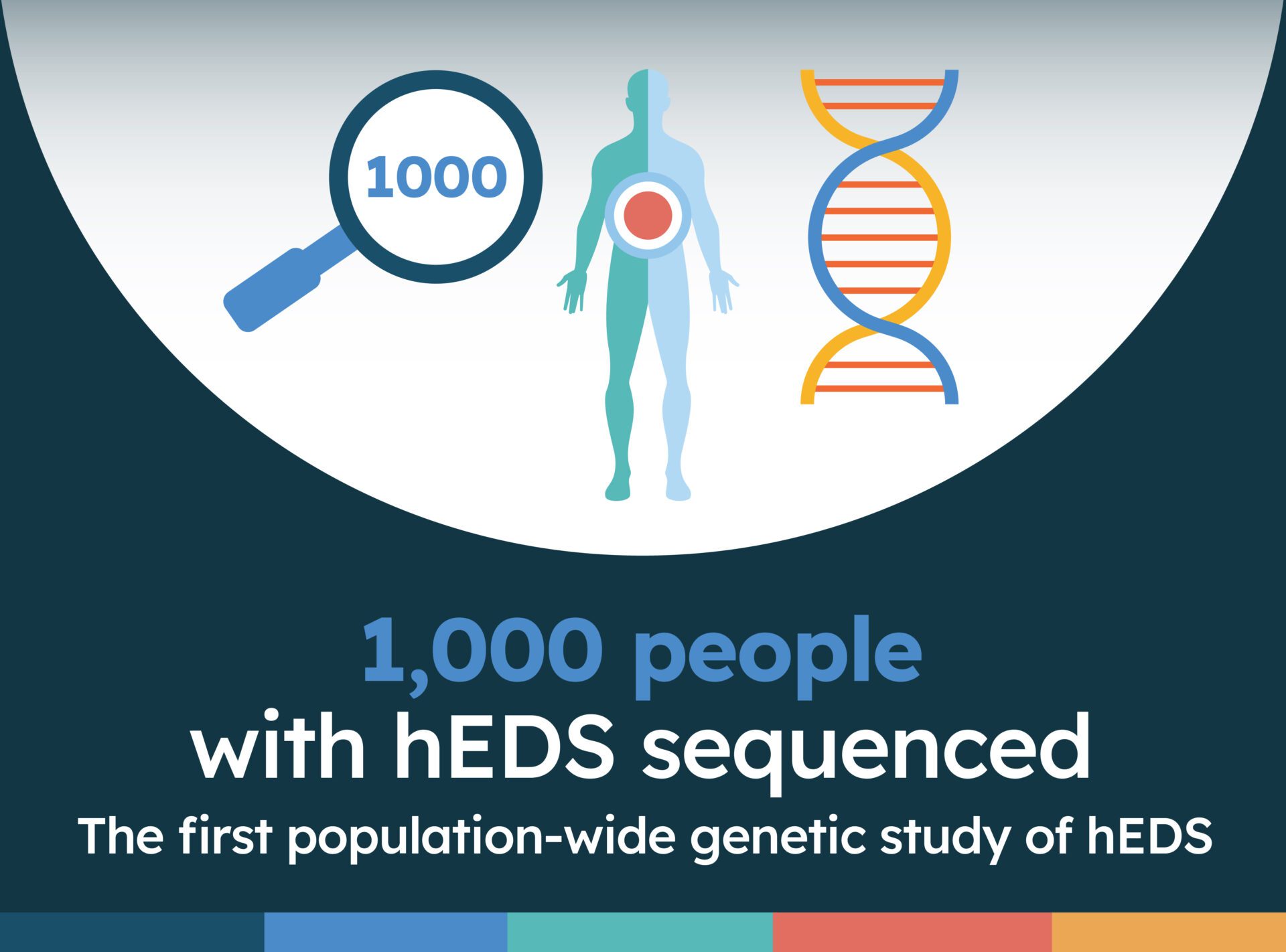
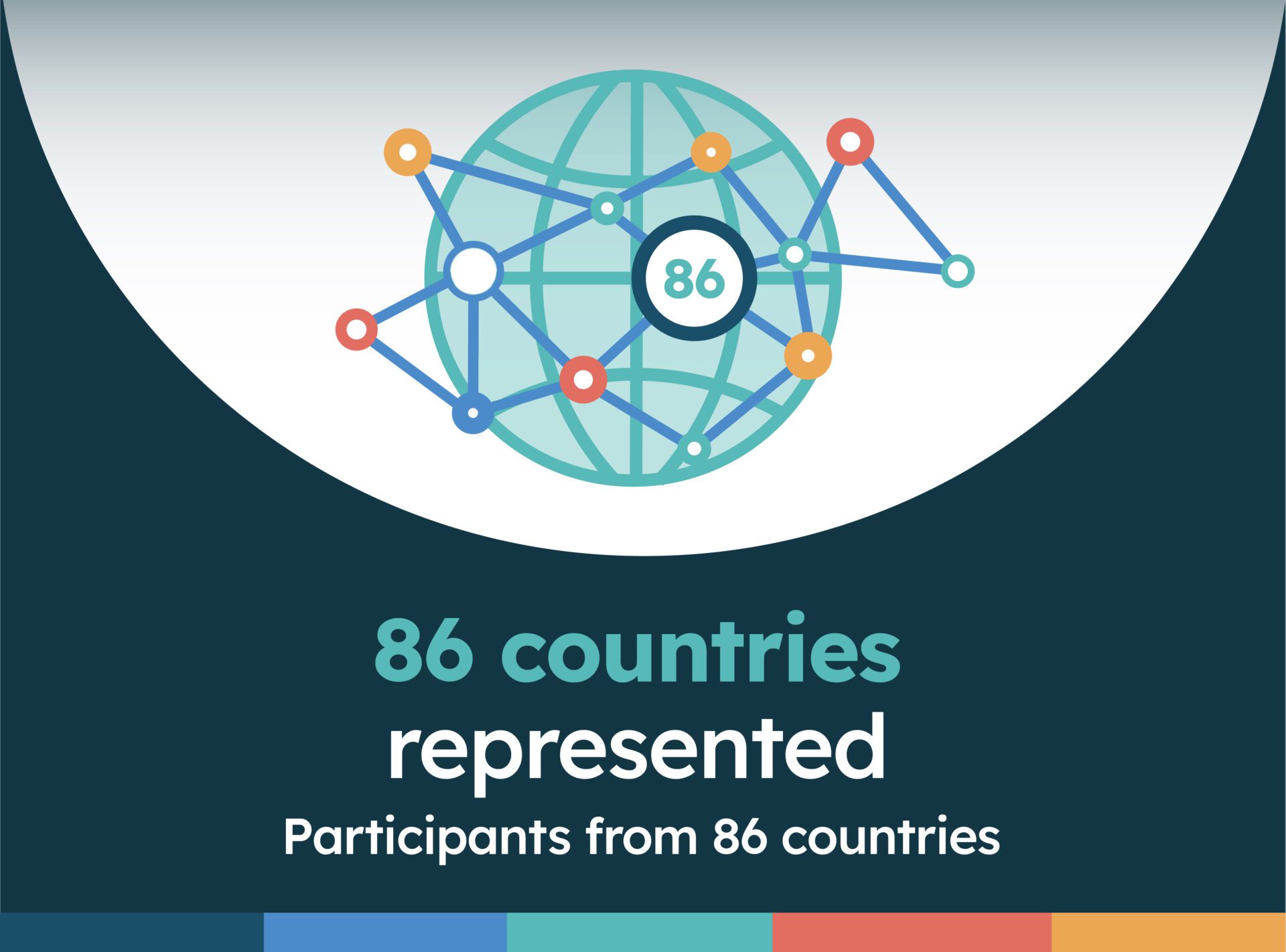
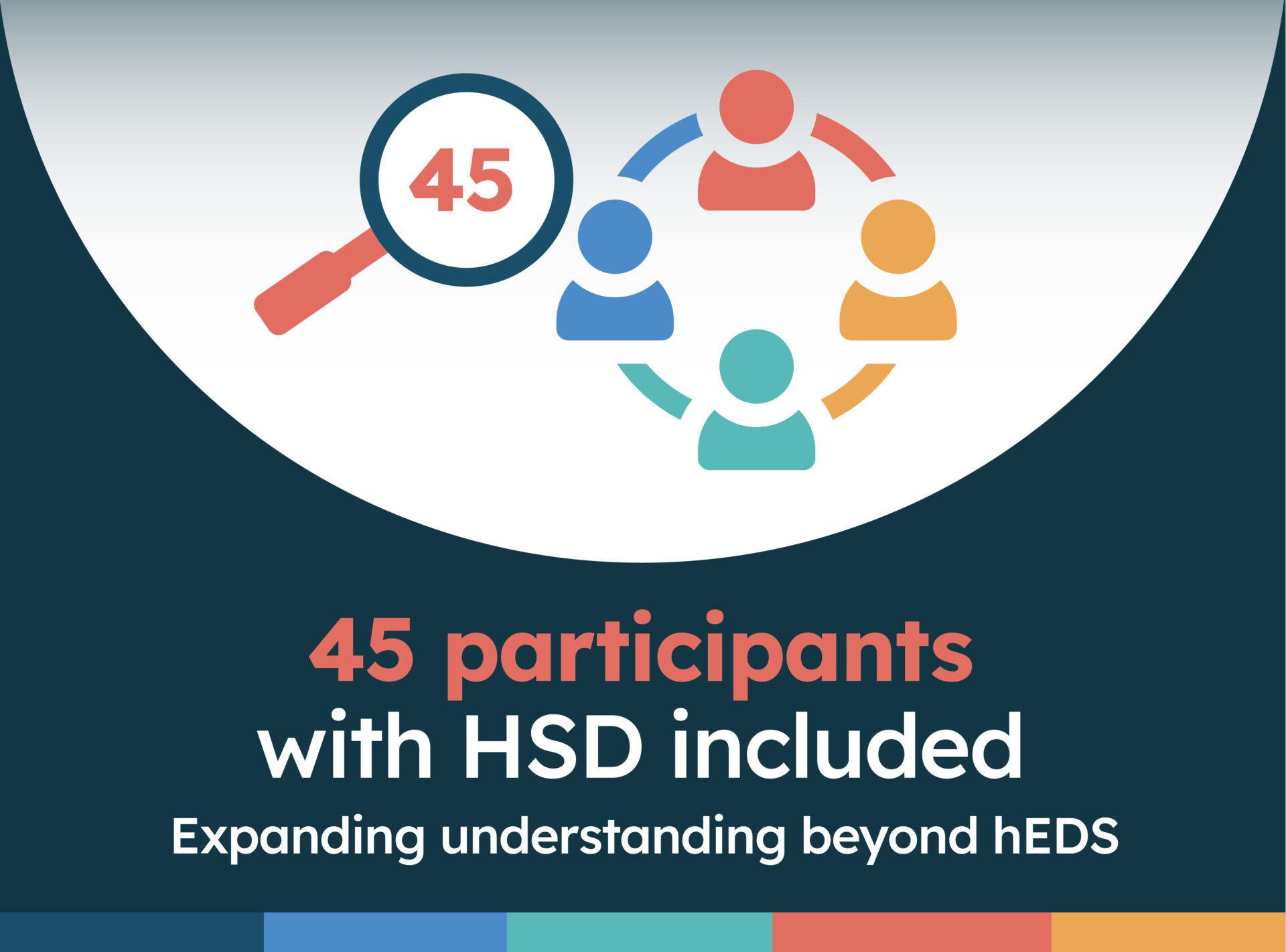
The HEDGE Study is the first population-wide genetic study of hypermobile Ehlers-Danlos syndrome (hEDS), sequencing the DNA of 1,000 people around the world. Participants from 86 countries also included 45 individuals with hypermobility spectrum disorder (HSD).
Analysis has identified 81 major symptom groups and more than 900 less common symptoms, giving the most complete picture of these conditions to date.
The Journey So Far
2018
Thanks to extraordinary donations, The Ehlers-Danlos Society launched the HEDGE Study, assembling an international team of researchers and clinicians to form the Hypermobility Biology Network.
2019–2021
HEDGE recruited and enrolled 1,000 people with hEDS, confirmed by the 2017 clinical criteria. The first enrollment event took place at The Ehlers-Danlos Society European Learning Conference in Madrid, Spain. In total, 12 in-person events were held worldwide. Participants recruited into HEDGE were also invited to join the HEDGE biobank, where their samples are stored and used for research during and after the study.
COVID-19 pandemic
When in-person recruitment was no longer possible, the team adapted by enrolling participants virtually, making it possible for people in 86 countries to take part.
Sequencing
DNA samples were sequenced at the Broad Institute of MIT and Harvard, one of the world’s leading genome centers.
Global effort
HEDGE became the largest study of its kind, combining the dedication of over 1,000 participants with collaboration across multiple research teams.
The 2025 Update
Thank you to everyone who took part in the HEDGE study. Here’s what we know so far from the analyses.
Overview
- DNA from 1,000 people with hEDS and 45 with HSD has been sequenced.
- Other known types of EDS and connective tissue disorders were ruled out, with only a few participants reclassified.
- No single gene explains hEDS or HSD yet. At this time, diagnosis is still based on clinical criteria, not a lab test.
Confirming hEDS diagnosis
- Out of 1,200 participants, fewer than 1% had genetic variants linked to another connective tissue condition, such as classical EDS, Marfan syndrome, or Loeys-Dietz syndrome.
- These individuals were directly contacted and guided toward appropriate follow-up care.
- For the other 99%+, the original clinical diagnosis of hEDS (or HSD) was correct showing that the 2017 criteria were used effectively by clinicians and that the HEDGE cohort is strong and reliable for genetic research.
Gene analysis results
- MTHFR: Despite much discussion online, analysis showed no connection to hEDS.
- TNXB: Rare variants were 3–5 times more common in hEDS, but still very uncommon (about 1%). TNXB may play a role in a small number of cases, but is not the main cause.
- KLK15: A previous publication by the Norris Lab suggested a link to hEDS, but in HEDGE, KLK15 variants were not more common in participants than in controls. While KLK genes could still play a role for some, the data show that KLK15 is not a universal cause of hEDS.
Symptom insights
- Most participants reported multi-system involvement.
- Common symptoms the participants reported included fatigue, digestive problems, sleep issues, and headaches.
- From the data reported by participants about the symptoms they experience, the team identified 81 main symptom groups, and more than 900 less common symptoms, providing one of the most detailed pictures of hEDS/HSD to date.
Control group comparison
- To make sense of the data, researchers compared HEDGE participants’ DNA to over 200,000 genomes from the U.S. All of Us Research Program, matching each HEDGE participant with five ancestry-matched controls.
- This confirmed that the HEDGE cohort is accurate, well-defined, and reliable for genetic discovery.
What’s Next
- Rare variant analysis: Completing studies of uncommon genetic changes that may explain subsets of hEDS.
- Genotype–phenotype studies: Exploring how genetic variants relate to symptoms, to explain why people with hEDS/HSD can have very different experiences.
- Mechanistic research: Building biological models to explain how genetic variants affect connective tissue, highlighting possible treatment targets.
- Publications: The first HEDGE papers are expected in December 2025, with more to follow in stages.
Thank You
The HEDGE Study would not have been possible without the generosity of over 1,000 participants, and the support of donors. Your contributions are changing the future of hEDS research.
Will I get my results?
Participants who were identified with another EDS type or a heritable connective tissue disorder have already been contacted. We are not able to return individual results because the purpose of HEDGE is to study genetic patterns across a large group of people, rather than to provide personal medical information. By taking part, participants are contributing to discoveries that may help improve diagnosis, care, and treatment for the whole EDS and HSD community. HEDGE participants are always notified of study updates ahead of the general public. If you have additional questions about what is or is not shared, please refer to your consent form.
When will results be published?
The first publications are expected in December 2025, with more to follow.
Does this mean a genetic test for hEDS is coming soon?
No. HEDGE has not identified a single gene that explains hEDS or HSD. Instead, the findings point to multiple rare genetic variants and complex interactions that may play a role. While a diagnostic test is not available at this time, this research is an important step toward building the knowledge needed to develop future tools for diagnosis and care.
Read more about what comes next in our full FAQs.
Who is involved in the HEDGE study?
HEDGE is led by The Ehlers-Danlos Society in collaboration with the Broad Institute of MIT and Harvard, University of Illinois, Indiana University, and members of the Hypermobility Biology Network.
Learn more in our full FAQs.
Updates
The HEDGE analysis team is currently preparing publication of their initial findings from the HEDGE (Hypermobile Ehlers-Danlos Genetic Evaluation) study. The team plans to publish a number of papers, which are expected to be released in 2025.
Ahead of this, the team submitted some of their findings to the American Society for Human Genetics (ASHG) conference.
The conference committee accepted the following three abstracts:
Laukaitis C., Subramanian D.N., Janousek V., et al. Assessment of Suspected Candidate Gene Variants in Hypermobility Ehlers-Danlos Syndrome Patients from the HEDGE Study Cohort (Abstract) Presented at the Annual Meeting of The American Society of Human Genetics, November, 2024 in Denver, Colorado.
Seth A., He W., Handsaker R., et al. Identifying Rare Variants Associated with Hypermobile Ehlers-Danlos Syndrome Using a Case-Only Cohort and Biobank Controls: Overcoming Ancestry and Technical Differences in Separately Sequenced Samples. (Abstract) Presented at the Annual Meeting of The American Society of Human Genetics, November, 2024 in Denver, Colorado.
He., Seth A., Handsaker R., et al. Multi-Ancestry GWAS for Hypermobile Ehlers-Danlos Syndrome. (Abstract) Presented at the Annual Meeting of The American Society of Human Genetics, November, 2024 in Denver, Colorado.
The abstracts can be read here by clicking on the “Program” tab, then the “Browse Abstracts” tab, and searching in search bar for HEDGE. We are not permitted to publish them ourselves until after the conference.
Here, you will find lay summaries of these abstracts and FAQs, and a general Q&A webinar update on the HEDGE Study and the publications.
The HEDGE Study analysis team is currently analyzing 1021 whole-genome sequences from individuals who have hypermobile Ehlers-Danlos syndrome (hEDS) by the 2017 clinical diagnostic criteria.
hEDS remains the only type of Ehlers-Danlos syndrome (EDS) that does not have known genetic markers and diagnosis cannot be confirmed through genetic testing. Many people with hEDS, therefore, experience delays in diagnosis, can be misdiagnosed and can experience delays in accessing suitable treatments.
The HEDGE study is a truly global collaborative effort with participants from 86 countries. The HEDGE analysis team hopes to complete their analysis of the DNA samples in late 2024, with the publication of their findings expected in 2025.
We are so thankful to members of the community who have taken part. As the findings from HEDGE are part of a research study and not a diagnostic test, participants will not hear any feedback or results until the end of the analysis, expected in late 2024. However, any participants found to have a genetic marker that suggests they have a different type of EDS or another heritable connective tissue disorder will be contacted directly. If the study identifies genetic variants that seem to be responsible for hEDS, we will notify the participants who carry have any of those variants and provide additional information.
For more details about the return of results, participants should refer to the consent form. If participants do not hear from us it will be because we have not identified any relevant genetic variants in their case. Please stay updated on HEDGE research by visiting our website, joining our CONNECT newsletter, and following us on social media.
We welcomed the members of the HEDGE Study analysis team who traveled from Australia, the Czech Republic, the United Kingdom, and the USA. The team is currently analyzing 1021 whole-genome sequences from individuals who have hypermobile Ehlers-Danlos syndrome (hEDS) by the 2017 clinical diagnostic criteria.
hEDS remains the only type of Ehlers-Danlos syndrome (EDS) that does not have known genetic markers and diagnosis cannot be confirmed through genetic testing. Many people with hEDS, therefore, experience delays in diagnosis, can be misdiagnosed and can experience delays in accessing suitable treatments.
The HEDGE study is a truly global collaborative effort with participants from 86 countries. The HEDGE analysis team hopes to complete their analysis of the DNA samples in late 2024, with the publication of their findings expected in 2025.
We are so thankful to members of the community who have taken part. As the findings from HEDGE are part of a research study and not a diagnostic test, participants will not hear any feedback or results until the end of the analysis, expected in late 2024. However, any participants found to have a genetic marker that suggests they have a different type of EDS or another heritable connective tissue disorder will be contacted directly. If the study identifies genetic variants that seem to be responsible for hEDS, we will notify the participants who carry have any of those variants and provide additional information.
For more details about the return of results, participants should refer to the consent form. If participants do not hear from us it will be because we have not identified any relevant genetic variants in their case. Please stay updated on HEDGE research by visiting our website.
The HEDGE analysis team is pleased to announce that the data are in and analysis is underway! Data is in the analysis pipeline for 1021 whole-genome sequences. The analysts are very happy with the data quality and are working to identify meaningful genetic variants. To do this requires a painstakingly careful and rigorous process, but they are making steady progress.
We would like to especially thank each and every volunteer who has taken part in the study and donated their time and DNA to help research for our futures.
Please remember that HEDGE is a research study and not a diagnostic test, so participants will not hear any feedback or results until the end of the analysis in approximately 18-24 months. However, any participants found to have genetically-defined types of EDS will be contacted directly.
If the study identifies a genetic variant that seems to be responsible for hEDS, we will notify the participants who carry that variant and provide additional information. For more details about the return of results, please refer to the consent form. If we do not identify any relevant genetic variants in your participation, we will not communicate further regarding your involvement in the study.
Please stay updated on HEDGE research by visiting our website, joining our CONNECT newsletter, and following us on social media.
The Ehlers-Danlos Society is pleased to announce the Hypermobile Ehlers-Danlos Genetic Evaluation (HEDGE), a landmark study to evaluate the genomes of 1000 people with hypermobile EDS, has completed enrollment.
The Broad Institute in Boston is performing whole-genome sequencing of the DNA samples and when all the samples have been sequenced, two teams will begin the data evaluation phase, which is expected to require two years.
Joel Hirschhorn, MD, Ph.D., Concordia Professor of Pediatrics and Professor of Genetics, Harvard Medical School, will lead the team in Boston, Massachusetts. Christina Laukaitis, MD, Ph.D., Associate Professor at the University of Illinois, and the Carle Illinois College of Medicine, will lead a team based in Illinois. Dr. Clair Francomano, Professor of Genetics at Indiana University and HEDGE co-Principal Investigator, commented “We are excited to see HEDGE enrollment completed after a lengthy process delayed by Covid and are looking forward to the start of data analysis.”
In recent months there have been some exciting announcements from Norris Labs at MUSC health about finding a candidate gene related to hEDS that will be published soon.
HEDGE is different to this work in that it is the first and only population study in hypermobile Ehlers-Danlos syndrome to sequence 1000 people.
Unlike studies of specific families, HEDGE is designed to provide information about causative genetic variants in the hEDS population by using statistical methods to identify variants that occur more commonly in hEDS. Studies in specific families have uncovered variants that appear to cause hEDS findings in a family, but no studies to date have yet shown findings that are thought to affect more than about 2% of people with hEDS. HEDGE is directed at understanding the remaining 98%.
“We believe hypermobile Ehlers-Danlos syndrome will most likely turn out to be a group of distinct genetic conditions that give rise to similar findings,” Dr. Francomano explained. Geneticists refer to the manifestations of a genetic condition as the “phenotype.” Dr. Francomano went on to say, “The hEDS phenotype could be due to many distinct genetic conditions; alternatively, a single genetic cause that has heretofore eluded identification may account for most cases – we just don’t know yet. HEDGE, by relying on whole-genome sequencing in a large population, offers the possibility of providing information regardless of which scenario is true.”
The Ehlers-Danlos Society extends its sincere thanks and gratitude to all of the individuals living with hEDS who applied for the study, and to those who donated their time and their blood samples to change the future of this condition.
The Ehlers-Danlos Society is delighted to announce that 1000 individuals have been invited for enrolment for the Hypermobile Ehlers-Danlos Genetic Evaluation (HEDGE) study! We continue to recruit for the study to ensure 1000 viable samples are obtained and are excited at the progress the study has made despite the challenges of the pandemic.
HEDGE is an ongoing study that will obtain whole-genome sequences for 1000 people with hypermobile Ehlers-Danlos syndrome (hEDS) under the 2017 criteria, and seek to establish the genetic cause(s) for hEDS.
Of the fourteen types of Ehlers-Danlos syndromes, hEDS remains the only type that does not have known genetic markers and diagnosis cannot be confirmed through genetic testing. Many people with hEDS therefore experience delays in diagnosis, can be misdiagnosed and can experience delays in accessing suitable treatments.
The HEDGE study is a truly global collaborative effort, individuals from 86 countries are enrolled in this study so far. We are so thankful to members of the community who have taken part from all around the world including in:
|
|
|
Whole-Genome Sequencing
Sequencing of the DNA samples is scheduled to begin at the world-renowned Broad Institute of MIT and Harvard.
The analysis will begin once all the samples have been sequenced. The agreement with the teams involved in the analysis is for up to two years, but we will be getting regular updates and look forward to sharing those with the community.
The Hypermobile Ehlers-Danlos Genetic Evaluation (HEDGE) is an ongoing study that will obtain whole-genome sequences for 1000 people with hypermobile Ehlers-Danlos syndrome (hEDS) under the 2017 criteria, and seek to establish underlying genetic causation.
Of the 14 subtypes of EDS, only the hypermobile type does not yet have identified genetic markers. If we are successful in identifying the underlying genes for hEDS, we can create vital opportunities for earlier diagnosis, and more comprehensive treatment and care.
Enrolling 1000 participants into HEDGE
Virtual enrolment for the HEDGE Study has been a success since its implementation in 2020 after the rise of the COVID-19 pandemic. The Ehlers-Danlos Society team is now able to remotely screen and invite individuals to the study via virtual record review of Global Registry data, ultimately removing any prior travel barriers. This has greatly increased accessibility to those interested in participating in HEDGE.
I would love to be a part of this study now that the travel barriers have been worked out! It is amazing what The Ehlers-Danlos Society has done for the Zebras in its care. I would be honored to advance that cause. –interested HEDGE participant
Eligibility screening through record reviews is still underway and will likely continue until the end of May 2021, or until 1,000 participants are consented and enrolled. We still encourage individuals to complete the survey and upload their documents onto the Global EDS and HSD registry if they are interested in joining HEDGE.
Currently, 720 participants are enrolled in the HEDGE Study out of the 772 invited thus far.
Enrolment Breakdown:
- 414 enrolled at screening events (prior to COVID-19 pandemic)
- 60 Whole Genome Sequencing (WGS) samples from Dr. Christina Laukaitis
- 246 virtually enrolled
These numbers will continue to quickly rise as we continue eligibility screening. We also anticipate approximately forty more Whole Exome Sequencing (WES) samples to undergo WGS from Dr. Laukaitis. In addition, we are working with a group of healthcare professionals who are screening their patient base and funneling them into the Global Registry for HEDGE invitation.
The Ehlers-Danlos Society is incredibly excited with the enrolment progress made despite challenges brought by the pandemic and grateful to all who have chosen to participate. This study will truly be a global effort with individuals enrolled in HEDGE from 23 countries around the world!
Country Breakdown:
|
|
|
Blood Draws and Samples
Blood samples of the 414 previously enrolled participants are being stored in the Genetic Alliance Biobank, and the 60 WGS samples from Dr. Laukaitis are in her lab. Of the 246 virtually enrolled, 111 completed their blood draws with samples sent to ReproCell for processing to isolate DNA.
The remainder of the individuals is either already scheduled to have blood drawn by ExamOne (for U.S. residents) or MedScreen Medical (for non-U.S. residents) at a later date or are still in the process of scheduling. HEDGE participants in countries outside of the U.S. are also experiencing further delays due to COVID-19 restrictions and lockdowns.
The first batch of processed blood samples from ReproCell is set to be shipped to the Genetic Alliance Biobank by the end of April. The samples will then be stored at the biobank until sequencing is ready to commence.
Goals
The Ehlers-Danlos Society’s goal is to have identified and invited 1,000 participants to join the HEDGE Study by the end of April. The consent and enrolment processes will proceed into May of 2021.
If 1,000 individuals have not enrolled by the end of May, the screening and invitation protocols will continue until that number is met.
Next Steps
The next phase of the HEDGE Study will be the sequencing of DNA samples to obtain data for analysis. Although the full 1,000 participants have not yet been reached, the sequencing of current samples is set to begin in May at the Broad Institute and will continue as more blood samples are drawn, processed, and shipped.
Once sequencing is finalized (this timeframe is not yet known), analysis of data will begin, bringing the medical community one step closer to finding the gene(s) responsible for hypermobile Ehlers-Danlos syndrome.
The Hypermobile Ehlers-Danlos Genetic Evaluation (HEDGE) is an ongoing study that will obtain whole-genome sequences for 1000 people with hypermobile Ehlers-Danlos syndrome (hEDS) under the 2017 criteria, and seek to establish underlying genetic causation.
Of the 14 subtypes of EDS, only the hypermobile type does not yet have identified genetic markers. If we are successful in identifying the underlying genes for hEDS, we can create vital opportunities for earlier diagnosis, and more comprehensive treatment and care.
Enrolling 1000 participants with hEDS
April 2019 – Mid 2021
To break down geographical barriers in research participation and to adapt to limitations on travel, The Ehlers-Danlos Society announced a new screening and enrollment process for the HEDGE study in 2020. The exciting newly-established process will make it possible for individuals with hypermobile Ehlers-Danlos syndrome (hEDS) to enroll in the groundbreaking study, without traveling to an in-person event. Invitees can now have blood drawn at home or at other locations.
415 individuals with hEDS have now been enrolled in the HEDGE study, with over 250 participants in the process to be enrolled this quarter. As more healthcare professionals are expected to join HEDGE by inviting their hEDS patients to enroll at the start of the new year, the goal number of 1,000 participants will soon be reached!
To assist in the enrollment process The Ehlers-Danlos Society is delighted to announce its move to LunaDNA in partnership to host the Global EDS and HSD Registry and Repository. The new registry is now mobile-responsive, enabling participants to now enroll easily from a smartphone device or desktop from around the world. The EDS and HSD Global Registry will facilitate medical research for ALL types of EDS, HSD, and associated symptoms and comorbidities. If researchers can identify hEDS genetic variants, future studies can then examine patients with hypermobility spectrum disorders (HSD) to determine how often these variants appear in that population.
Whole-genome sequencing and analysis
Once all 1000 participants have been enrolled into HEDGE, whole-genome sequencing can begin. The results from the research will hopefully be published 12-24 months after analysis begins.
Following an open Request for proposals, geneticists Dr. Joel Hirschhorn, and Dr. Christina Laukaitis were awarded a grant to do the analysis collaboratively. Dr. Hirschhorn is the Concordia Professor of Pediatrics and Professor of Genetics at Boston Children’s Hospital/Harvard Medical School and an Institute Member of the Broad Institute. Christina M. Laukaitis, MD, Ph.D. Christina Laukaitis is an associate professor at the University of Illinois and the Carle Illinois College of Medicine. She is board-certified in Internal Medicine and Medical Genetics.
Publication and potential future studies
Based on research and expert opinion, to date there have only been less than 200 people with hypermobile EDS who have had whole-genome sequencing, and, less than 500 who have had whole-exome sequencing with EDS around the world. To have the collection of data from this study will enable us to take giant leaps forward in research and discovery for our community.
Global Collaboration
When the HEDGE study was first funded, we assembled a global team of experts that made up the Hypermobile EDS Genetic Research Network, consisting of leading authorities in fields ranging from human genetics to neurosurgery, to function as the nucleus for research design, data collection, and analysis during the course of the genomic mapping.
As the study progresses we have decided to evolve the network into The Hypermobility Biology Network so that it lives past the study on this essential subject so that it continues to be discussed. Read more about this network here. This network remains a collaborative review body for the HEDGE study.
“Understanding the genetic causes of hypermobile EDS is absolutely crucial to the EDS community,” said Clair Francomano, MD, chair of The Ehlers-Danlos Society’s Medical and Scientific Board, Director of The Ehlers-Danlos Society Center for Clinical Care and Research at the Harvey Institute of Human Genetics in Baltimore, MD, and a member of The Hypermobility Biology Network. “It will allow us to make unequivocal diagnoses, for one thing. Further, understanding the genetic pathways leading to hypermobile EDS will inform the search for rational therapies for this disorder, and hopefully, eventually, a cure.”