Myopathic Ehlers-Danlos syndrome (mEDS) is a heritable connective tissue disorder that causes muscle weakness in infancy and childhood, delayed gross motor development, joint hypermobility, and joint contractures.
mEDS is an ultra-rare disorder that affects less than 1 in 1 million people.
Signs and Symptoms
Key signs and symptoms of mEDS include:
Muscle weakness in infancy or childhood
Delayed gross motor development
Joint contractures
Joint hypermobility
You can learn more about the features of mEDS by selecting different body parts from the menu.
Causes
Genetic Basis
mEDS is caused by genetic variants in the COL12A1 gene, which provides instructions for making type XII collagen.
Humans have two copies of each gene because we inherit one from each parent. People with mEDS may have pathogenic variants in one or both copies of the COL12A1 gene.
Inheritance
mEDS can be inherited in an autosomal dominant or autosomal recessive pattern.
Autosomal recessive inheritance
Autosomal means the condition can be passed on and inherited equally by males and females. Recessive inheritance means the condition only occurs when both copies of a gene are affected by pathogenic variants.
A person with two pathogenic variants in the same gene will always pass on one pathogenic variant to their children. Their children will only have the condition if they inherit a second pathogenic variant in the same gene from their other parent.
People with one recessive pathogenic variant are known as carriers. Carriers do not have mEDS themselves but may pass the genetic variant on to their children.
Autosomal dominant inheritance
Autosomal means the condition can be passed on and inherited equally by males and females. Dominant inheritance means that people with the condition have one pathogenic variant. In this case, people with the condition have a 50% chance of passing the condition on to each child they have.
The autosomal recessive form of mEDS causes more severe symptoms from birth. The autosomal dominant form of mEDS is milder and presents in childhood.
Diagnosis
If a person meets the diagnostic criteria for mEDS, genetic testing should be done to confirm the diagnosis. Genetic testing is used to see if a person has the genetic variants that cause mEDS.
To meet the diagnostic criteria for mEDS, a person must meet:
Major criterion 1 AND at least one other major criterion OR
Major criterion 1 AND at least three minor criteria
Major Criteria
Congenital muscle hypotonia and/or muscle atrophy that improves with age
Proximal joint contractures (knee, hip, and elbow)
Hypermobility of distal joints
Minor Criteria
Soft, doughy skin
Atrophic scarring
Motor developmental delay
Myopathy on muscle biopsy
Management
mEDSis managed by addressing the symptoms a person is experiencing. mEDS can cause a variety of symptoms in many different areas of the body, so people with mEDS may require multiple providers in different specialties to manage their care. Key aspects of care include preventing injuries, doing physical therapy, and managing other symptoms. Each person should work with their care team to develop a care plan that meets their needs.
Choose a body part from the menu to explore the signs and symptoms of mEDS
Signs and Symptoms
Musculoskeletal
Spine
Skin
Eyes
Mouth and Throat
Chest and lungs
Feet
How to Use:
Explore the features of mEDS by selecting different body parts from the menu. Please note that mEDS affects each person differently.
The symptoms listed here may not affect everyone with mEDS, and people with mEDS may have other symptoms that are not listed on this page. This page is intended to provide information about symptoms that may occur in individuals with mEDS and does not constitute medical advice. Always consult a healthcare professional for personalized medical guidance.
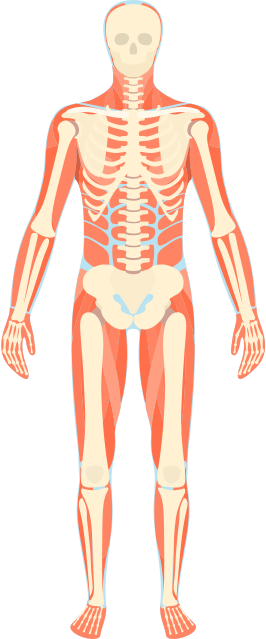
Select from the list below to learn how mEDS can affect the musculoskeletal system.
Low muscle tone
Muscle tone is the amount of tension (or resistance to movement) in the muscles. Muscle tone allows us to hold our bodies upright and affects the control, speed, and range of our movement. Muscle hypotonia, or low muscle tone, means the muscles are floppy and unable to properly support the body’s position and movement. It may require more effort for people with hypotonia to move and maintain good posture.
Low muscle tone is observed at birth in mEDS and typically improves over time.
Delayed gross motor development
Motor skills are actions that use specific muscle movements to perform a task. Gross motor skills involve large muscle groups, such as rolling, crawling, and walking. Delayed gross motor development means that a child has trouble with gross motor skills that other children their age can do.
It may take people with mEDS longer to learn to walk, but most people can eventually walk independently.
Joint hypermobility
Joint hypermobility means a joint has a greater range of motion than usual. Joint hypermobility is common in people with mEDS, particularlyin the hands and feet.
Joint contractures
A joint contracture is a fixed tightening of tissues that prevents normal joint movement. Joint contractures may be present at birth in mEDSand are most common in the knees, hips, and elbows.
Joint instability
A joint is the point where two or more bones connect. Joint instability means the bones of a joint are not held in place securely. This can lead to joint subluxations, dislocations, sprains, and other injuries.
A joint dislocation occurs when the bones in a joint separate completely and are no longer touching. A subluxation is a partial dislocation in which a bone comes out of place but still touches the other bone(s) in the joint.
Hip dysplasia
Congenital hip dysplasia, also called congenital hip dislocation, is a condition in which the hip joint is not formed correctly at birth. The hip is a ball-and-socket joint. The ball of the femur moves within the socket of the pelvis, allowing movement of the legs. In someone with hip dysplasia, the socket of the pelvis is too shallow to support the ball of the femur properly. This can lead to instability, pain, and problems with walking.
Pain
People with mEDS may have pain due to their musculoskeletal symptoms.
Myopathy
Myopathy is a general term for diseases that affect muscle fibers. Muscle biopsies from people with mEDS show changes in the muscle fibers, including variation in fiber size.
Muscle atrophy
Muscle atrophy is the thinning of muscle tissue, also called muscle wasting.
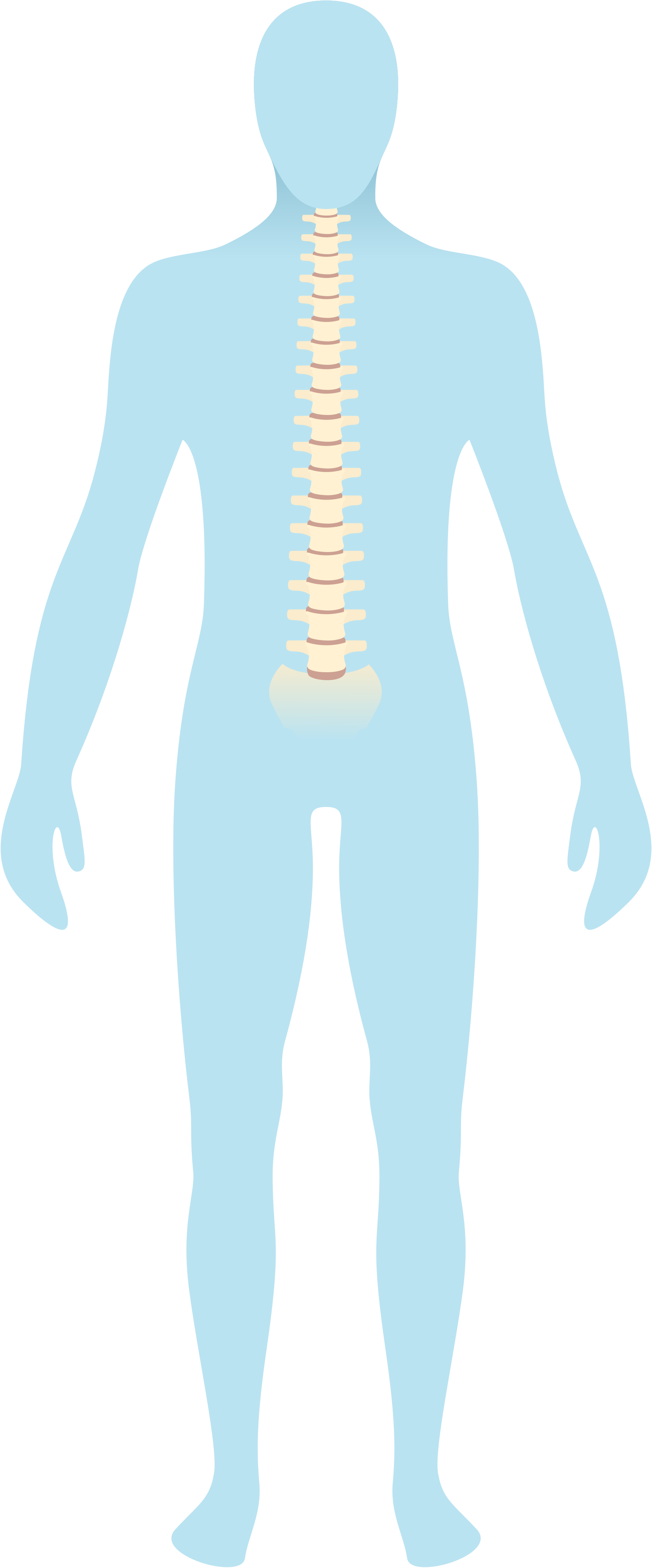
Select from the list below to learn how mEDS can affect the spine.
Kyphosis
Kyphosis is an abnormal forward curve in the spine that causes the upper back to look more rounded. Kyphosis is typically present at birth in people with mEDS.
Scoliosis
Scoliosis is a sideways curve in the spine that gives the spine an “S” or “C” shape.
Torticollis
Torticollis occurs when the neck musclesinvoluntarily contract and cause the head to tilt or twist to one side.
Select from the list below to learn how mEDS can affect the skin.
Skin hyperextensibility
Skin hyperextensibility means the skin can be stretched beyond the normal range.
Hypertrophic scars
Hypertrophic scars are thick, raised scars.
Atrophic scars
Atrophic scars are scars that have widened and become thin, causing them to appear sunken.
Soft, doughy skin
People with mEDS may have a soft and doughy skin texture.
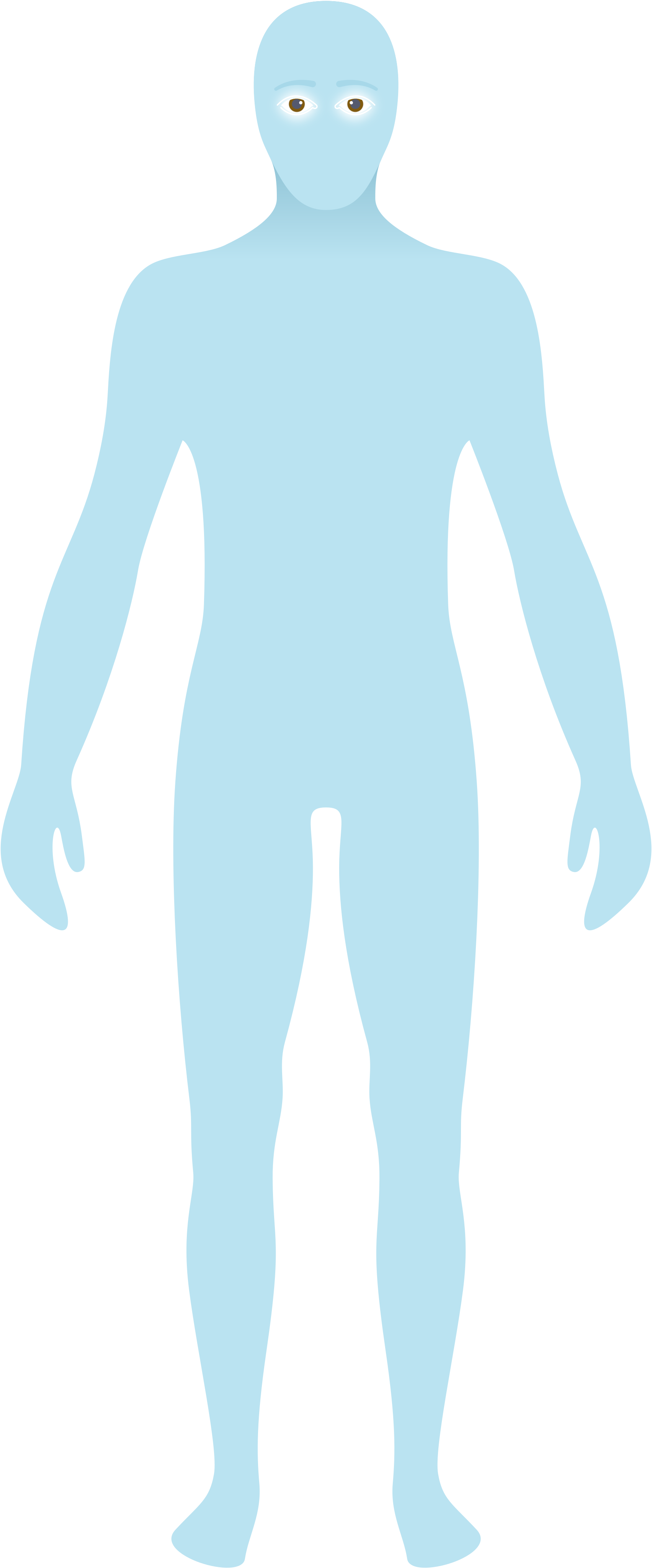
Select from the list below to learn how mEDS can affect the eyes.
Blue sclerae
The sclera (plural: sclerae) is a protective layer of connective tissue that surrounds most of the eye. The sclera is usually white but is more transparent when collagen fibers are thin. This allows the underlying tissue to show through, giving the eyes a bluish color.
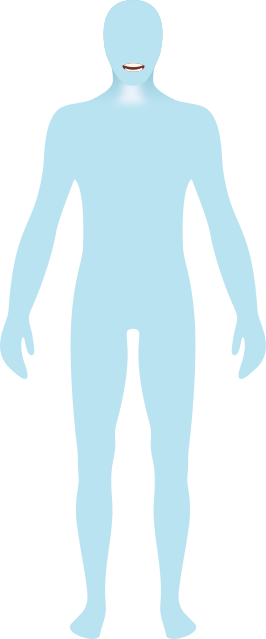
Select from the list below to learn how mEDS can affect the mouth and throat.
High-arched palate
A high-arched palate means the roof of the mouth is unusually tall or narrow.
Micrognathia
Micrognathia means the lower jaw is smaller than usual.
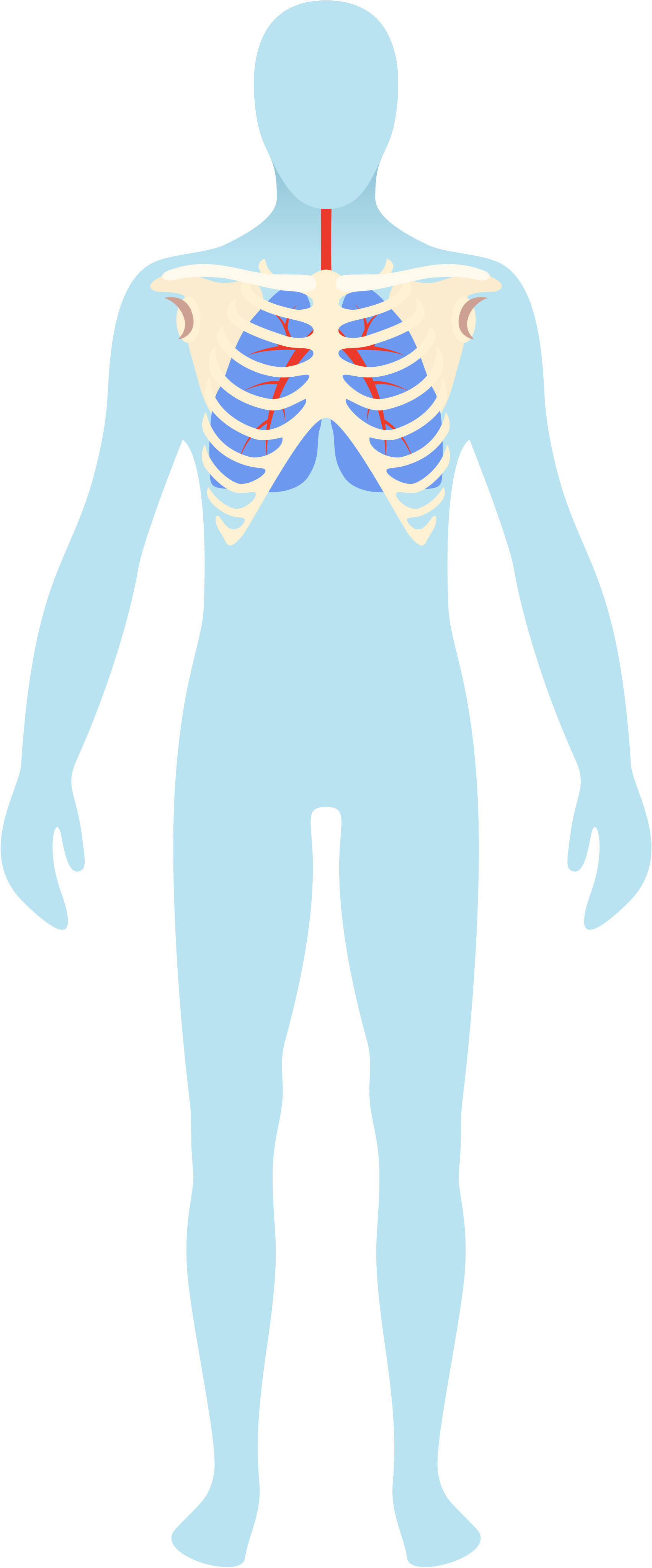
Select from the list below to learn how mEDS can affect the chest and lungs.
Pectus excavatum
Pectus excavatum is an indentation in the chest that occurs when the sternum grows inward. This happens when too much connective tissue grows between the ribs and the sternum. Mild pectus excavatum may not cause any problems, but if the indentation is deep enough, it can put pressure on the lungs and heart. Pectus excavatum has been reported in mEDS but is not a common feature.
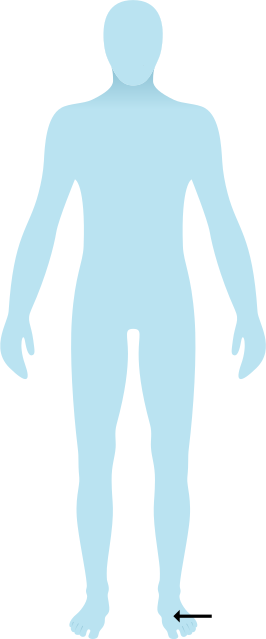
Select from the list below to learn how mEDS can affect the feet.
Flat feet
Flat feet (pes planus) means the feet have little to no arch when standing. When a person with flat feet stands, the entire bottom of their foot touches the ground.
Clubfoot
Club foot (talipes equinovarus) causes the foot to point downward and twist inward, typically at birth. This causes the toes to point toward the opposite leg and can make walking difficult if not addressed.
Please note that mEDS affects each person differently. The symptoms listed here may not affect everyone with mEDS, and people with mEDS may have other symptoms that are not listed on this page. This page is intended to provide information about symptoms that may occur in individuals with mEDS and does not constitute medical advice. Always consult a healthcare professional for personalized medical guidance.
A novel homozygous nonsense variant in COL12A1 causes myopathic Ehlers-Danlos syndrome: A case report and literature review (Sherif et al., 2024) https://doi.org/10.1111/nan.13004
Homozygous splice site variant affecting the first von Willebrand factor A domain of COL12A1 in a patient with myopathic Ehlers-Danlos syndrome (Yoshimura et al., 2023) https://doi.org/10.1002/ajmg.a.63328
Novel defects in collagen XII and VI expand the mixed myopathy/Ehlers-Danlos syndrome spectrum and lead to variant-specific alterations in the extracellular matrix (Delbaere et al., 2020) https://doi.org/10.1038/s41436-019-0599-6
Collagen XII myopathy with rectus femoris atrophy and collagen XII retention in fibroblasts (Witting et al., 2018) https://doi.org/10.1002/mus.26067
Novel Col12A1 variant expands the clinical picture of congenital myopathies with extracellular matrix defects (Punetha et al., 2016) https://doi.org/10.1002/mus.25232
Mutations in the collagen XII gene define a new form of extracellular matrix-related myopathy (Hicks et al., 2014) https://doi.org/10.1093/hmg/ddt637
Recessive and dominant mutations in COL12A1 cause a novel EDS/myopathy overlap syndrome in humans and mice (Zou et al., 2013) https://doi.org/10.1093/hmg/ddt627
We use cookies on our website to give you the most relevant experience by remembering your preferences and repeat visits. By clicking “Accept All”, you consent to the use of ALL the cookies. However you may visit Cookie Settings to provide a controlled consent. Read More ACCEPT ALLCookie settings
Manage consent
Privacy Overview
This website uses cookies to improve your experience while you navigate through the website. Out of these cookies, the cookies that are categorized as necessary are stored on your browser as they are essential for the working of basic functionalities of the website. We also use third-party cookies that help us analyze and understand how you use this website. These cookies will be stored in your browser only with your consent. You also have the option to opt-out of these cookies. But opting out of some of these cookies may have an effect on your browsing experience.